What to work on, first.
You have a few hundred posts and thirty minutes. The radar scans every one of them, sets aside what’s fine, and ranks what’s winnable by the clicks in play — posts losing traffic, posts within reach of page one, posts whose season is coming. Each one opens into a brief with the homework already done.
It also tells you what not to work on.
A radar card reads like this: “Ranks #6.2, but CTR trails the position — rewrite the title tag & meta description to earn the clicks.” That’s the whole diagnosis, in real SEO terms, with a hover glossary if a term is new. And the honesty cuts both ways: a post declining for reasons no edit can fix is labeled Watch — don’t over-invest, and a healthy post is called what it is — one of your winners, nothing to fix.
Ranked, not listed
Every post scored, then sorted by the estimated monthly clicks in play — from your real impressions and positions. The work that moves traffic sits at the top; a “Start here” set makes the first move obvious.
A brief for every post
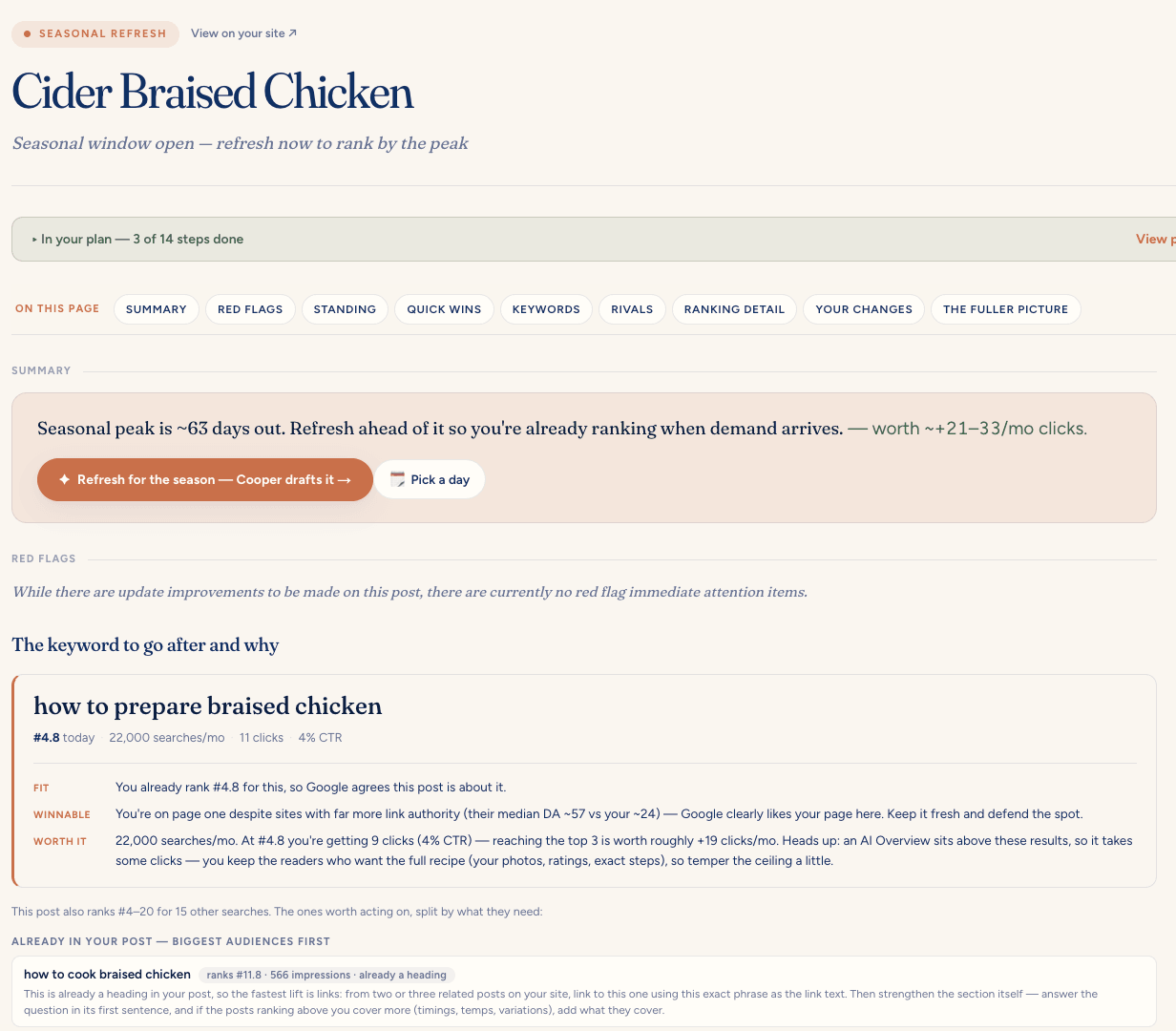
Why it’s flagged, performance over the last 28 days, how readers behave, where they come from, how the post is linked — and the concrete play, spelled out. Read it, make the edit, done.
Sized to your day
Every task carries an estimate — ~15 min for a title rewrite, ~1 hr for a full refresh — so you can filter to what fits the time you have. Not today? Snooze it and it comes back in about two weeks.
The brief becomes a plan
One click drafts an action plan from the brief — every step checkable, sized in minutes, with the copy ready to paste. Make the edit on your site and the step is marked ✓ verified live. Your work, noticed.
The whole site, watched
Beyond single posts: two of your posts competing for the same keyword, broken links, images missing alt text, and demand sitting under a Google AI Overview — each with its own worklist when something turns up.
Stop scrolling your own blog, wondering.
The radar has already read every post. Open it and start at number one.
Get started →